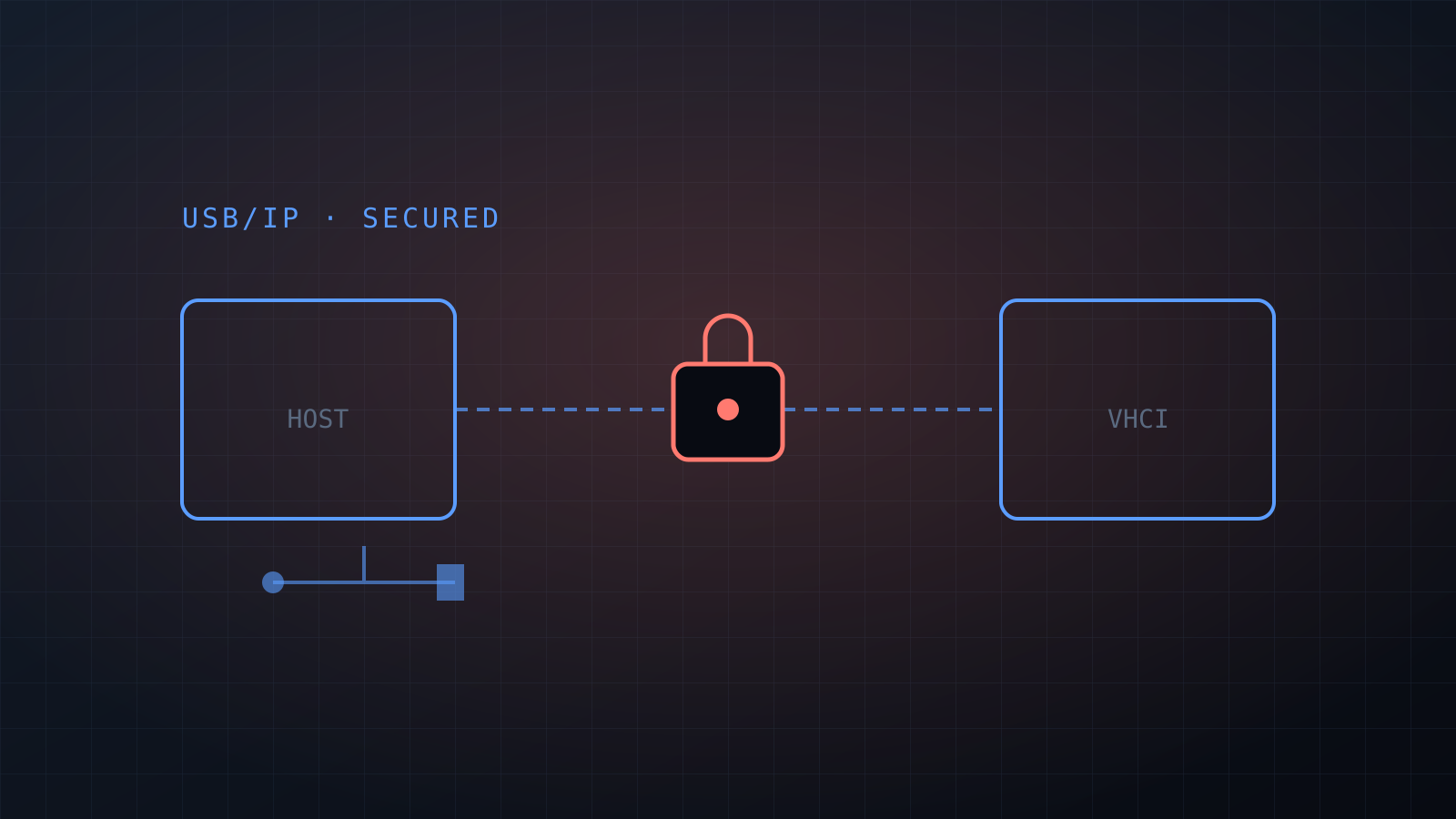
USB/IP lets a machine export a physical USB device over the network and have another machine treat it as if it were plugged in locally. It is genuinely useful — and it ships with no authentication and no encryption.
The problem
The protocol trusts the network. Anyone who can reach the exporting host's port can attach the device; anyone on the path can read the traffic. For a debug rig on a lab bench that is tolerable. For anything else it is not.
The work
A fork of the kernel's USB/IP implementation (kept under the original GPLv2) as a base for implementing a security protocol on top of the existing transport.
The pieces involved:
usbip-vhci— the client-side virtual USB host controllerusbip-host— the server-side stub driver that binds a physical device for exportusbip-vudc— exporting virtual devices via the USB Gadget subsystemusbip-utils— the userspace tools for attaching and listing devices
Approach
Authentication and session establishment before any URB traffic is allowed, so an unauthenticated peer never reaches the device at all — rather than bolting a tunnel around the outside and hoping the deployment remembers to use it.
A URB, or USB Request Block, is the structure the kernel uses to carry a single USB transfer. Gating at that layer means the check sits below anything a client could talk its way past.
Status
Work in progress, in the open on GitHub.